1. Make aware the credible news sources and websites. When spreading news through social media, the audience should be able to trace back to the original source of the information. Similar to how verified accounts have a check symbol on their account, there should be something similar to credible websites that can only be obtained with legitimacy. Even if CNN or Fox News is spreading the truth, people who want to spread false rumors can very easily imitate them and fool people into believing that this news is true and it has a legitimate organization backing its accuracy.
https://news.northwestern.edu/stories/2020/09/social-media-contributes-to-misinformation-about-covid-19/
“Additional findings showed those under age 45 were most likely to believe false claims, with older ages less likely. Those under age 25 had an 18% chance of believing a false claim, with people ages 25–44, 45–64 and 65+ having a probability of 17%, 12%, and 9%, respectively.”
“Black Americans held the highest average level of belief in the 11 false claims (17%), followed by Hispanics (16%), with white and Asian Americans at 13%. The most believed claims by racial minority and ethnic groups were that antibiotics can prevent COVID-19 — 23% for Black Americans. Meanwhile, 23% of white and Hispanic respondents believed that China created the coronavirus as a weapon.”
2. Use advertisement to make people aware of the facts of the matter at hand. A lot of advertisements are being made right now promoting people to get the vaccine. Google’s ads have been very interesting as well as they use the search tab to show regular life things minus the pandemic and end on searching up the nearby covid vaccine. The government should also push for flyers and posters regarding the vaccine because when something becomes common knowledge there is no more major fear for a small gossip.
https://news.wsu.edu/2020/12/14/social-media-use-increases-belief-covid-19-misinformation/
“It seems that the more you use social media, the more likely you become worried about COVID-19, perhaps because there is a lot of unfounded and conspiracy theories on social media,” Su said. “Then this, in turn, can trigger a higher level of worry which leads to further belief in misinformation.”
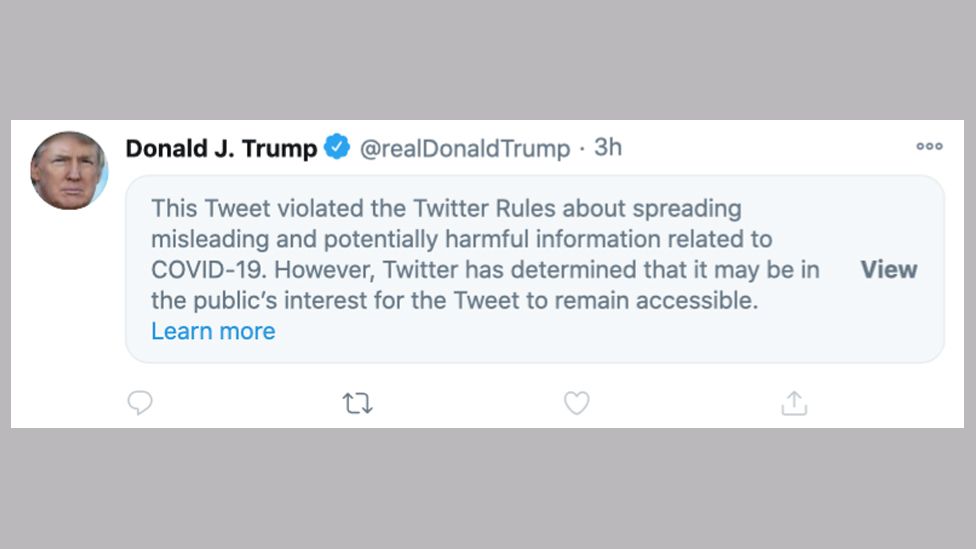
3. Ban people on social media who spread misinformation regardless of their popularity or power. (aka Ban Trump).

This entry is licensed under a Creative Commons Attribution-NonCommercial-ShareAlike 4.0 International license.

